
Excess inventories / obsoletes goods
Product destruction…What is at stake?
“ A Zero-Waste approach is one of the fastest, cheapest, and most effective strategies we can use to protect the climate and environment.”
– Institute for Local Self-Reliance (2008)
2 Billion
tons of waste are produced globally each year.
3.5 Gigatons
of total greenhouse gases emitted are due to emissions from landfills.
95%
of waste produced globally is estimated not to be recycled.
Destructions bans are here to stay
• This global movement started in the agro business (2015), then Fast Fashion in order to avoid product destruction and promote a circular economy.
• Some countries just passed anti-waste laws to ban designer clothes and luxury goods companies from destroying unsold or returned items. The law also covers hygiene products and cosmetics, which must now be reused, redistributed or recycled. The anti-waste and circular economy bill requires producers, importers and distributors, including online firms such as Amazon, to donate unsold non-food goods except those that pose a health or safety risk.
• Landmark French law will stop unsold goods being thrown away
• More than €650m worth of new consumer products are destroyed or thrown away every year in France only.
• That recycling & anti-waste trend is also reflected thru several Apps that offers consumers to resell or donate their clothes (Vinted, Tradesy, Threadflip, Poshmark, Listia, ThredUP , depop, Everdrobe, Mercari).

Where do we stand ?
DESTOCKING / EXCESS INVENTORY MANAGEMENT IN THE BEAUTY SECTOR
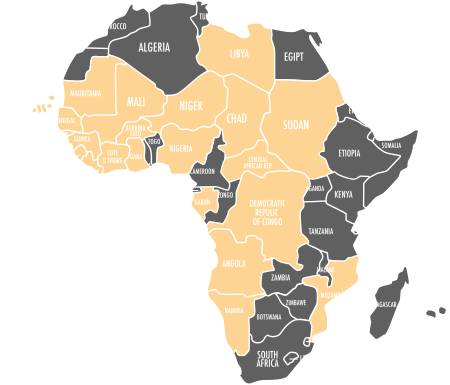
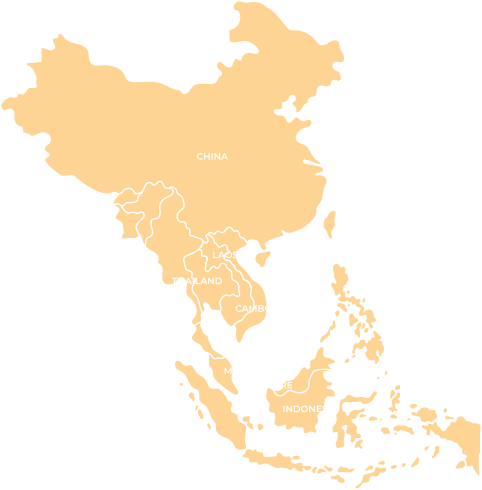
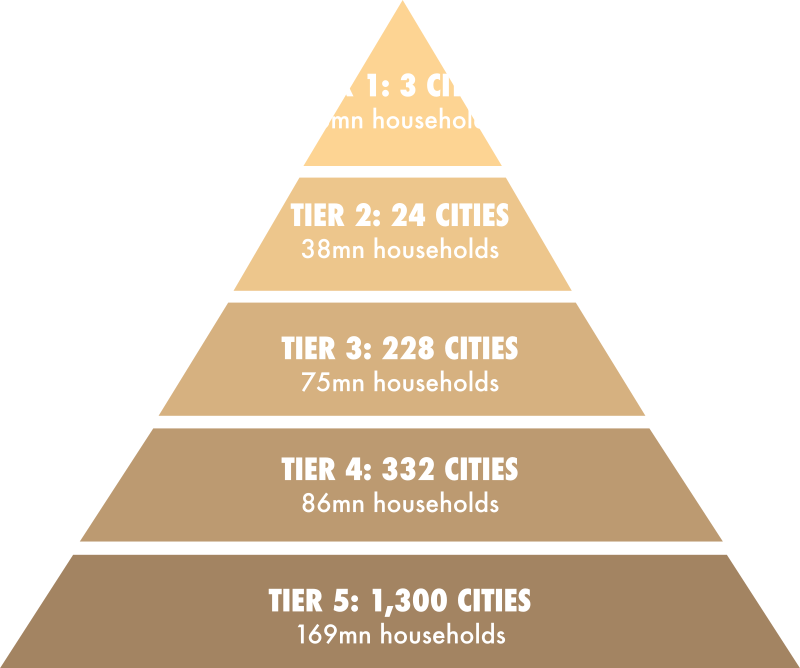
Our network can move excess inventory or store returns in beauty products, Key destination markets to destock are:
• Africa
• Central Asia
• South East Asia
• Chinese borders
• 4-5th tier Chinese cities
Those deals are typically done COD / LC can be provided to show solid financial stability. Purchasing is done thru our French or US subsidiaries.
Disposition markets
AFRICA
SOUTH EAST ASIA
CHINA TIER 4-5 CITIES
Key take aways
TRACEABILITY
• Open audit by supplier on product flow / access to facilities
• Provide packing lists and bills of lading
• Report on market presence
PROCESS
• Removal of stickers and tags
• Make-up bundling
NO CONFLICT WITH EXISTING DISTRIBUTION
• Distribution in network where selective distribution is not present
SUSTAINABILITY
• Started with Food, then Fast Fashion. Now P&C. Avoid product destruction.